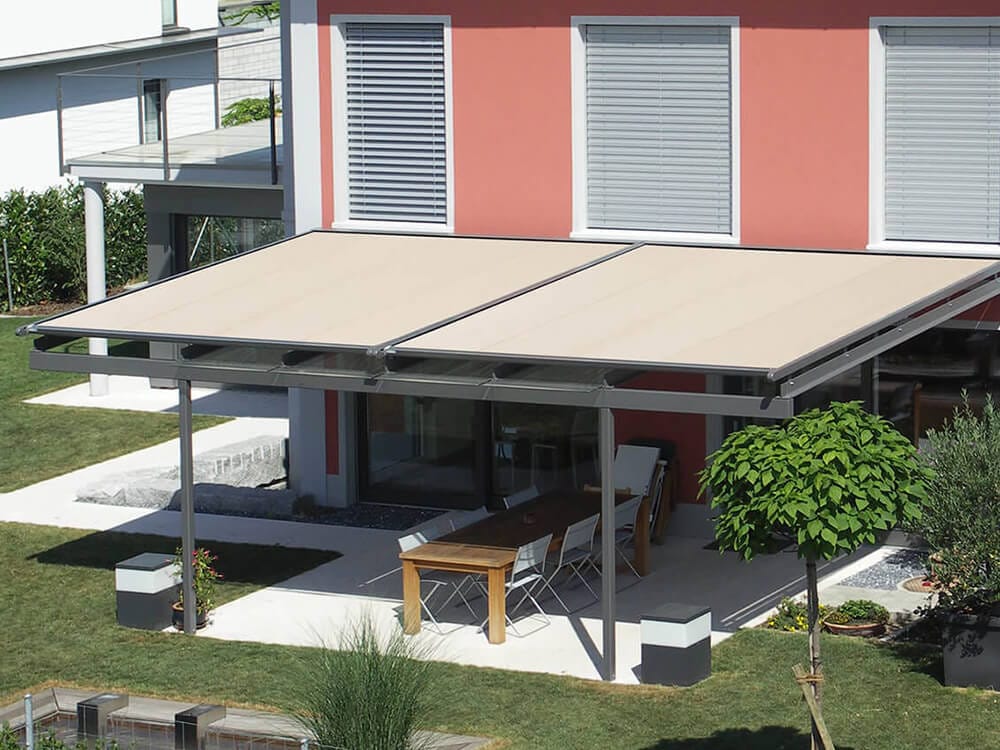
The right outdoor shade solution reduces the sunlight that reaches your home’s interior. That lowers indoor temperatures, making your air conditioner’s job easier while reducing your energy costs. Read on to learn more about how deck covers, retractable roof systems, retractable awnings, roll screens, and cable shades can make temperature management easier and more budget-friendly.
How Patio Covers Affect Your Home’s Temperature
Few homeowners realize just how much heat streams inside via windows and glass doors. Most of the energy from sunlight passes easily through glass, trapping heat in your living space. Hot deck materials make it even worse. The surface of your deck can absorb a great deal of heat, causing it to radiate heat that reaches your walls and windows well into the evening.
Most people’s first impulse is to turn the air conditioning up, but that’s an expensive band-aid over a bigger problem. Making your air conditioning work harder for longer periods to fight a constant influx of heat drives your energy costs up while running your air conditioner down, which will cost you in repairs or replacement. Patio covers prevent the problem at an earlier stage by preventing your deck from absorbing heat and blocking direct sunlight from reaching your home’s interior.
Deck Covers Block Heat Before It Gets Inside
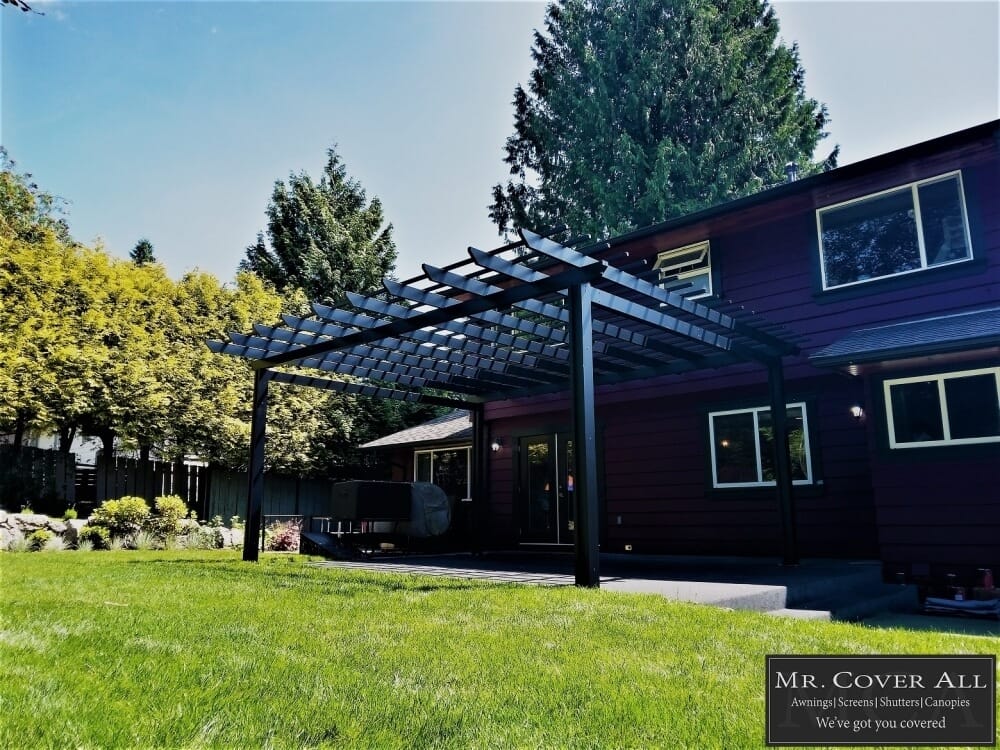
Temporary fixes like portable umbrellas don’t shade entire decks or the windows overlooking them. The expansive coverage of a permanent overhead structure like a deck cover keeps a deck from soaking up heat, as established above, but heat isn’t the only issue. Blocking direct sunlight from your interior also protects flooring, fabrics, furniture, and art from harsh UV rays that speed up their degradation.
Some covers perform better than others. Clear glass deck cover panels create an open, airy feel, but they let more sunlight through. Some specially treated glass can block more UV light. Frosted glass is a stylish alternative that filters light considerably, creating gentler, more diffuse lighting. Tinted acrylic deck cover panels also provide softer lighting, while opaque ones block sunlight entirely. Insulated deck cover panels are the top performers when it comes to blocking radiant heat. Picking the right material for your patio cover will keep your outdoor space comfortable even on hot days.
Retractable Roof Systems Give You Shade on Demand
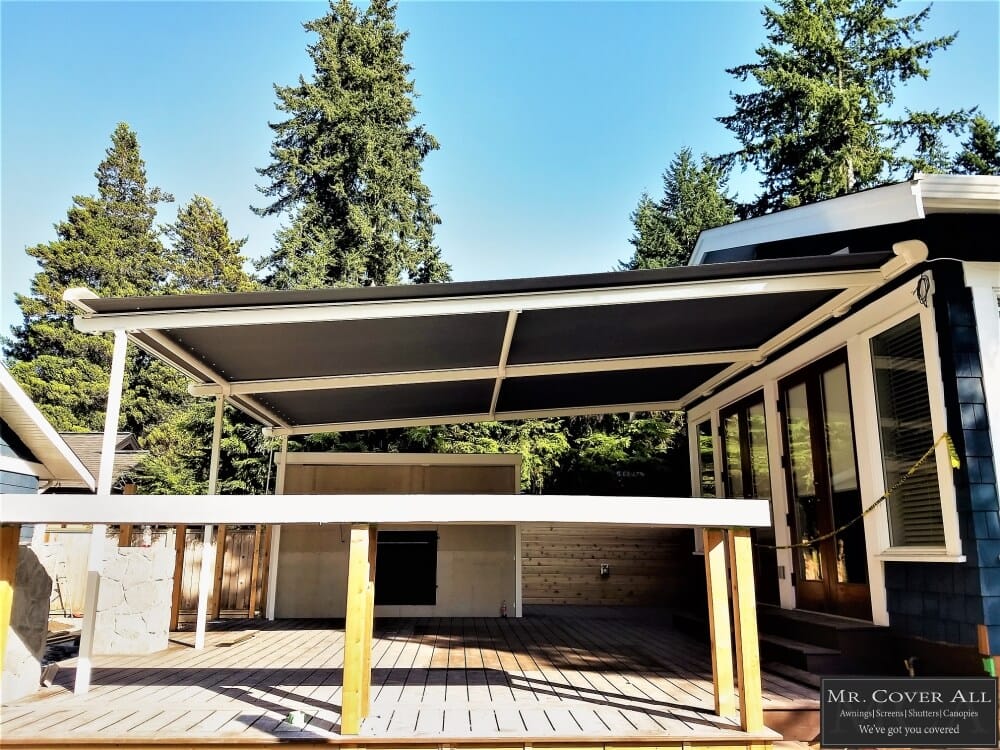
A fixed deck cover delivers consistent protection, but a retractable roof system adds something a permanent structure can’t: control. Opening and closing the roof in seconds lets you decide exactly when to block the sun and when to let it in, so your deck doesn’t have to commit to one look or one climate strategy year-round.
That flexibility pays off most on the days that don’t fit a simple “hot” or “cool” label. Close the slats during a midday heat spike and you get the same heat-blocking benefit as an insulated panel, keeping your deck surface from absorbing sun that would otherwise radiate into your home later in the evening. Open them back up on a mild afternoon and you get full sky access without rearranging any furniture or hardware.
Many retractable roof systems are built from the same durable, weather-resistant materials as fixed covers, so closing the roof during a sudden downpour offers real protection, not just shade. Pair that with sun or rain sensors, and the system can adjust on its own, closing before you even notice the weather has turned. For homeowners who want the energy savings and UV protection of a deck cover without giving up the option of an open-air patio, a retractable roof is often the simplest way to get both.
Retractable Awnings, Roll Screens, and Cable Shades Help Your Wallet
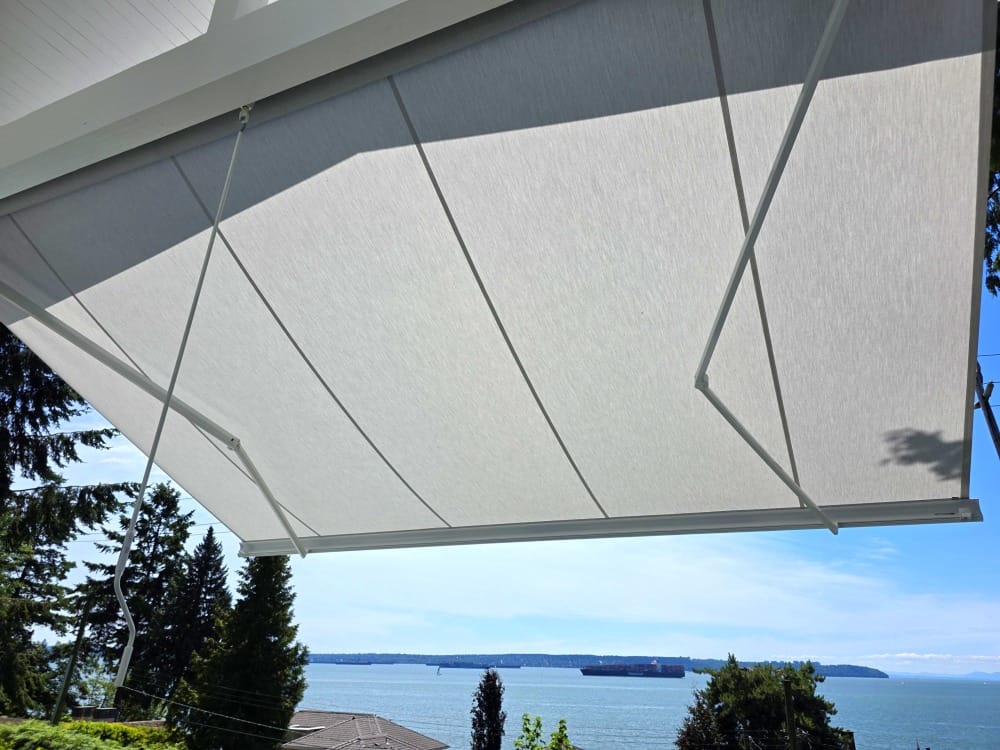
A high-quality deck cover handles the biggest problem: heat streaming into your home and driving up energy costs. Gaps still exist, though, and certain additions can close them. Retractable awnings are easy-to-adjust barriers that block sunlight in a targeted way. Exterior roll screens reduce glare and temperature while preserving views. Meanwhile, cable shades and retractable patio screens can work as flexible supplements to your other efforts as the sun traverses the sky. Layering one solution on top of another gives you the ultimate flexibility to reduce direct sunlight from every angle.
The rewards are easy to measure. Research shows that some window awnings drop solar heat gain by 60% or more in the summer. Just imagine how the reduction in cooling costs could add up over the years. Aside from your energy bills, the right outdoor shade solution will provide a comfortable outdoor space to enjoy in almost any weather while protecting both you and your property from UV damage.