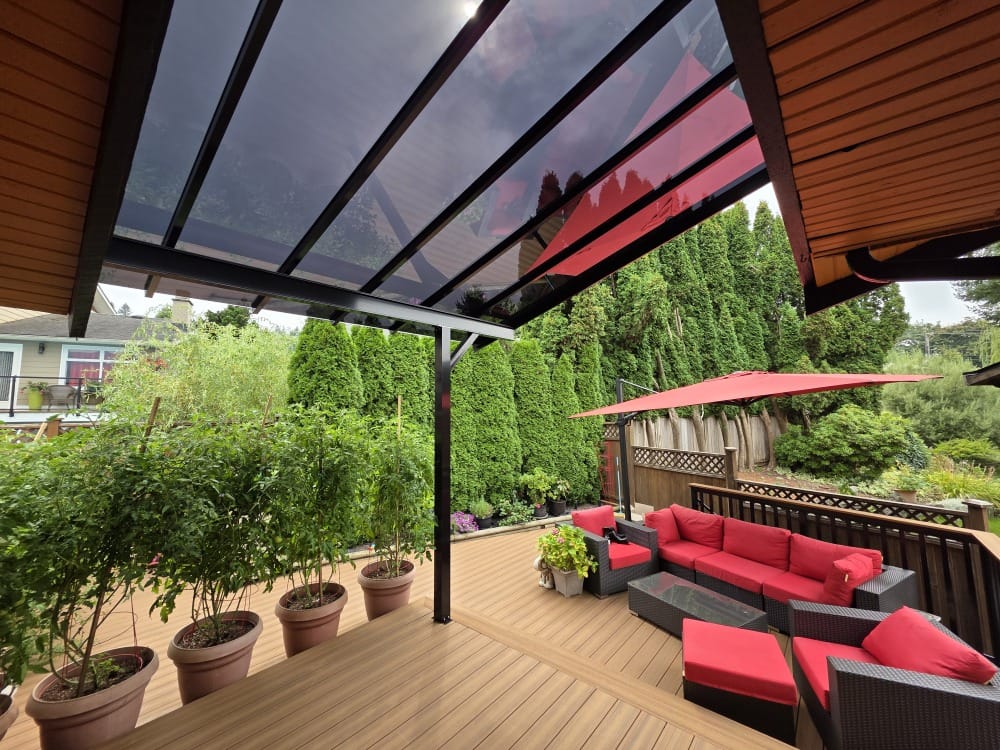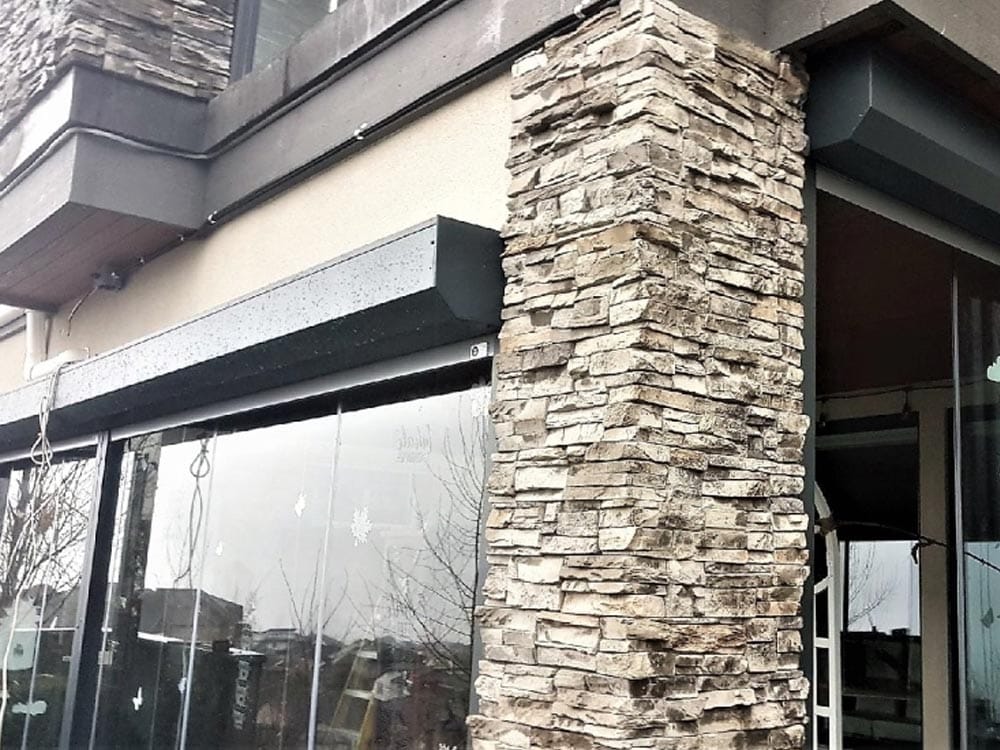
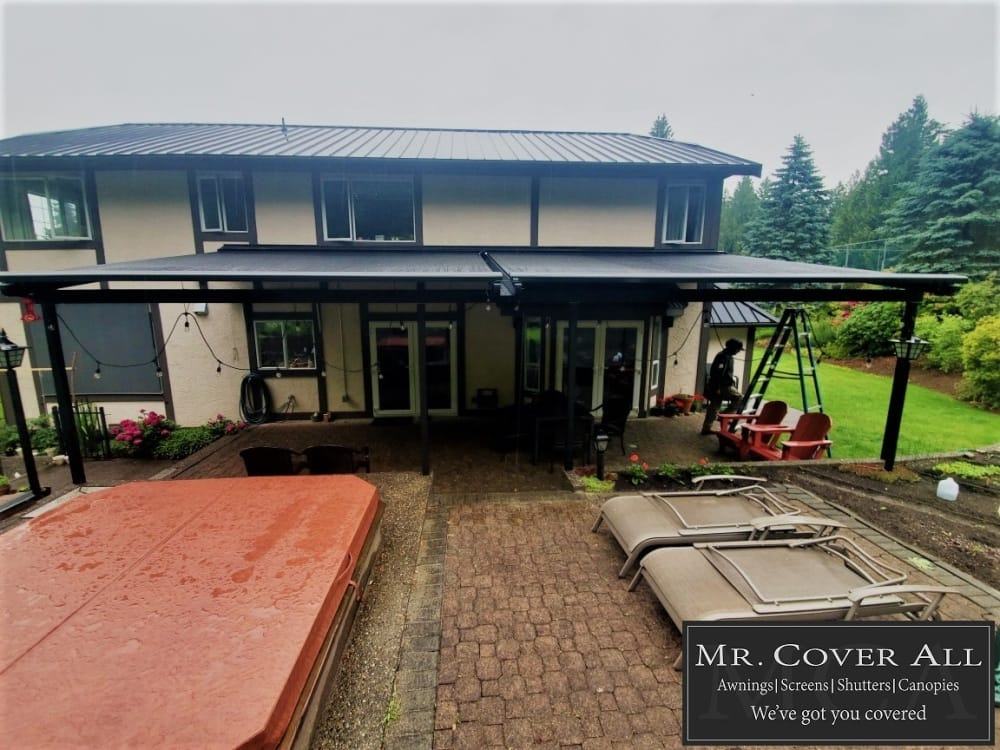
A leak in a retractable roof system calls for quick action. Outdoor structures take a real beating in the Vancouver area’s long, damp winters, and water can wreak havoc on flooring, deck and patio materials, and furniture. Read on to learn more about how to spot and handle leaks early.
Recognizing Leaks in Retractable Roof Systems
Some leaks are attention-grabbing, like water dripping on the floor or puddles under the roof. Water discolouration on ceilings, walls, beams, and posts can also be clearly visible. Lingering damp spots are another bad sign, as is water running down anywhere except through the drainage system. Other signs include mildew or a musty smell, warping or softening of wood, rust on metal parts, and water marks on nearby furniture. Check seals, gaskets, posts, mounting points, drainage channels, and the area where your retractable roof meets the larger structure. Signs are most obvious during or right after rain, so that’s the best time to check.
Water doesn’t always indicate a leak, however. Sometimes, a particularly intense rainstorm, wind blowing rain in from the side, or condensation in high humidity makes it look as though a leak exists where it doesn’t. True leaks show up again and again. Often, leaks will arise alongside changes in a retractable roof’s functionality, such as odd sounds or jerky movements. These small leaks need roof leak repair before they turn into much more expensive problems.
What Causes Leaks in Patio Roof Systems?
Sunlight, temperature swings, debris, and moisture are common causes of damaged seals and gaskets. Misaligned or damaged panels, frames, and hardware can also cause issues. Connection problems—gaps where the roof attaches to a structure, weak sealant, and degraded fasteners—are another common source of leaks. Drainage channels themselves can get clogged or damaged. Routine cleaning and maintenance can prevent some of these issues, and regular checks make sure you’ll catch any that can’t be prevented.
Inclement weather often exposes hidden weaknesses. Wind-driven rain shoves water sideways and upward into nooks and crannies, while gusts put stress on panels. Meanwhile, continuous rain pushes drainage capacity and seals to their limits. Keep in mind that a leak’s source isn’t always where it appears. Water could be entering a structure from feet away. If you’re having trouble tracing or fixing a leak, it might be time to call in a professional.
What to Do About Roof Leaks
First, protect your possessions. Move any furniture, rugs, or decor away from the area. If an item in the affected location can’t be moved, use a waterproof cover for protection. Put buckets under drips, and soak up any pooled water or moisture. If the roof appears damaged or is functioning poorly, stop using it. Next, take photos or videos of the leak and any related damage. Take notes on when it occurred and what the conditions were.
DIY solutions work sometimes, but other times, they treat symptoms without getting to the cause. It’s time to call a professional if leaks recur, grow larger, or appear in more than one spot. Visibly damaged components or poor functioning are two more signs. Professionals have an understanding of how water moves through retractable roof systems, allowing them to find and fix problems that could thwart a DIYer’s efforts indefinitely.